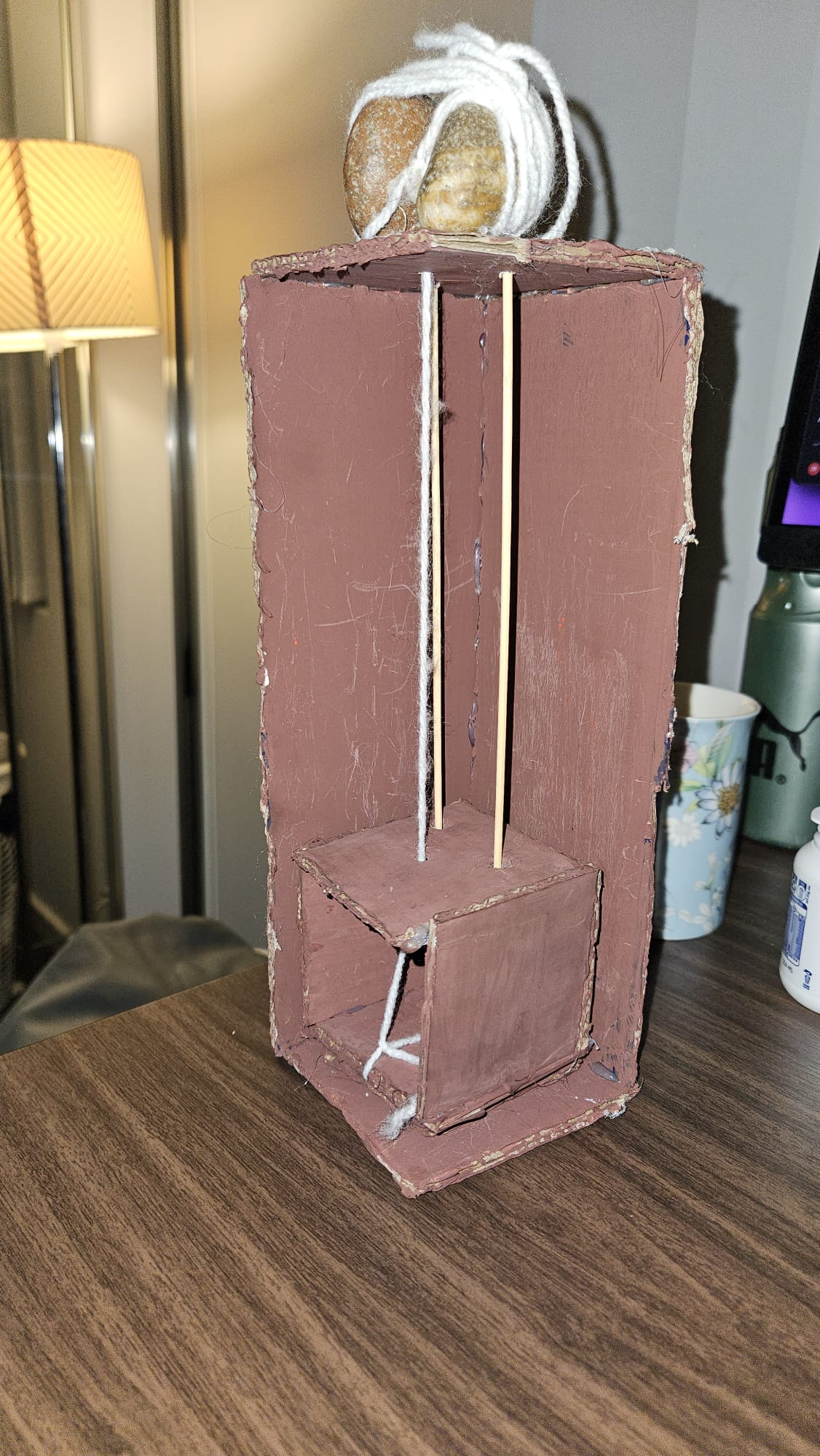
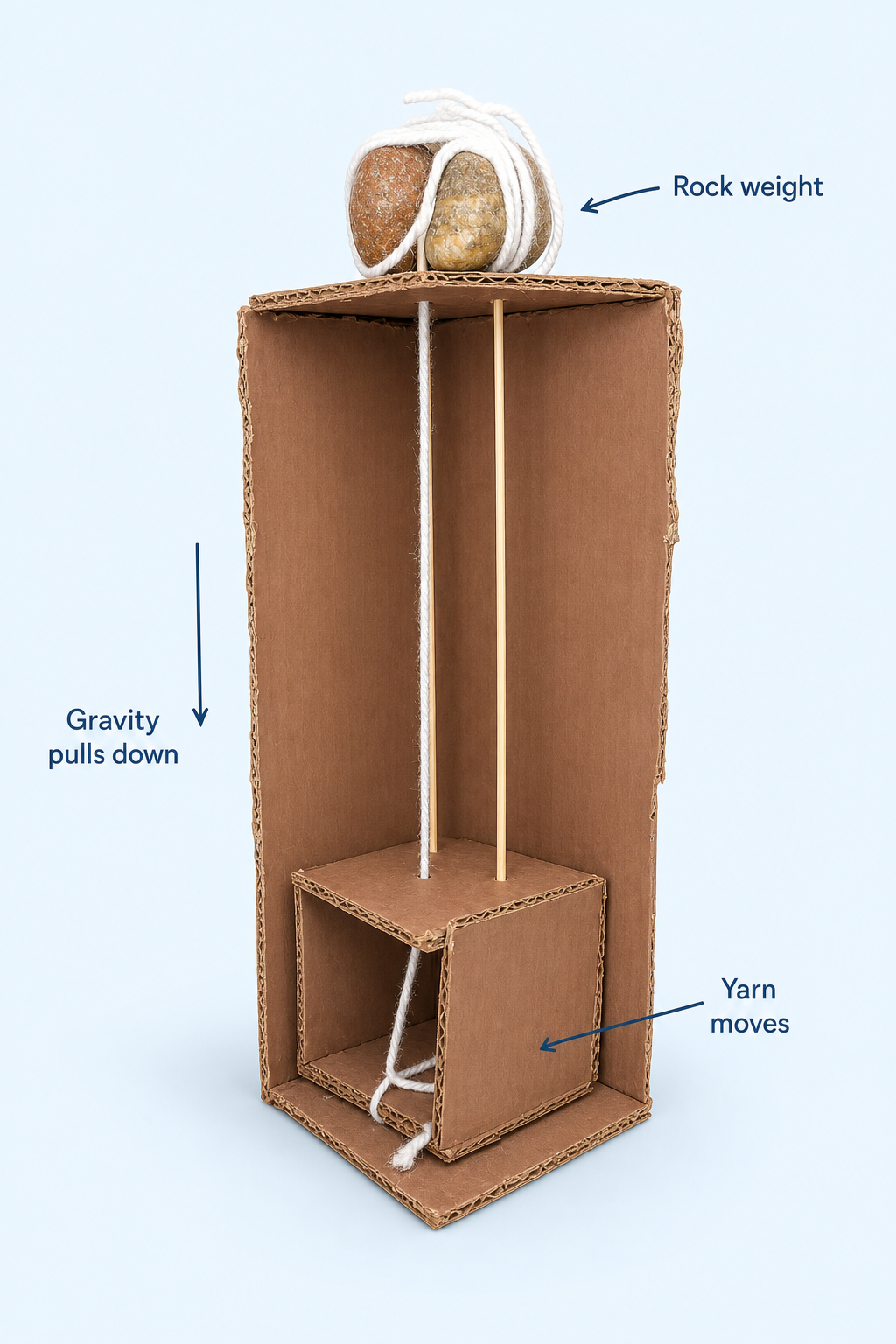
How can a falling weight make a string move? This project investigates the pull of gravity using a handmade cardboard tower, yarn, wooden sticks and rocks.
Created by Zunaira Zeeshan
🧠
Stage 1
Planning the tower
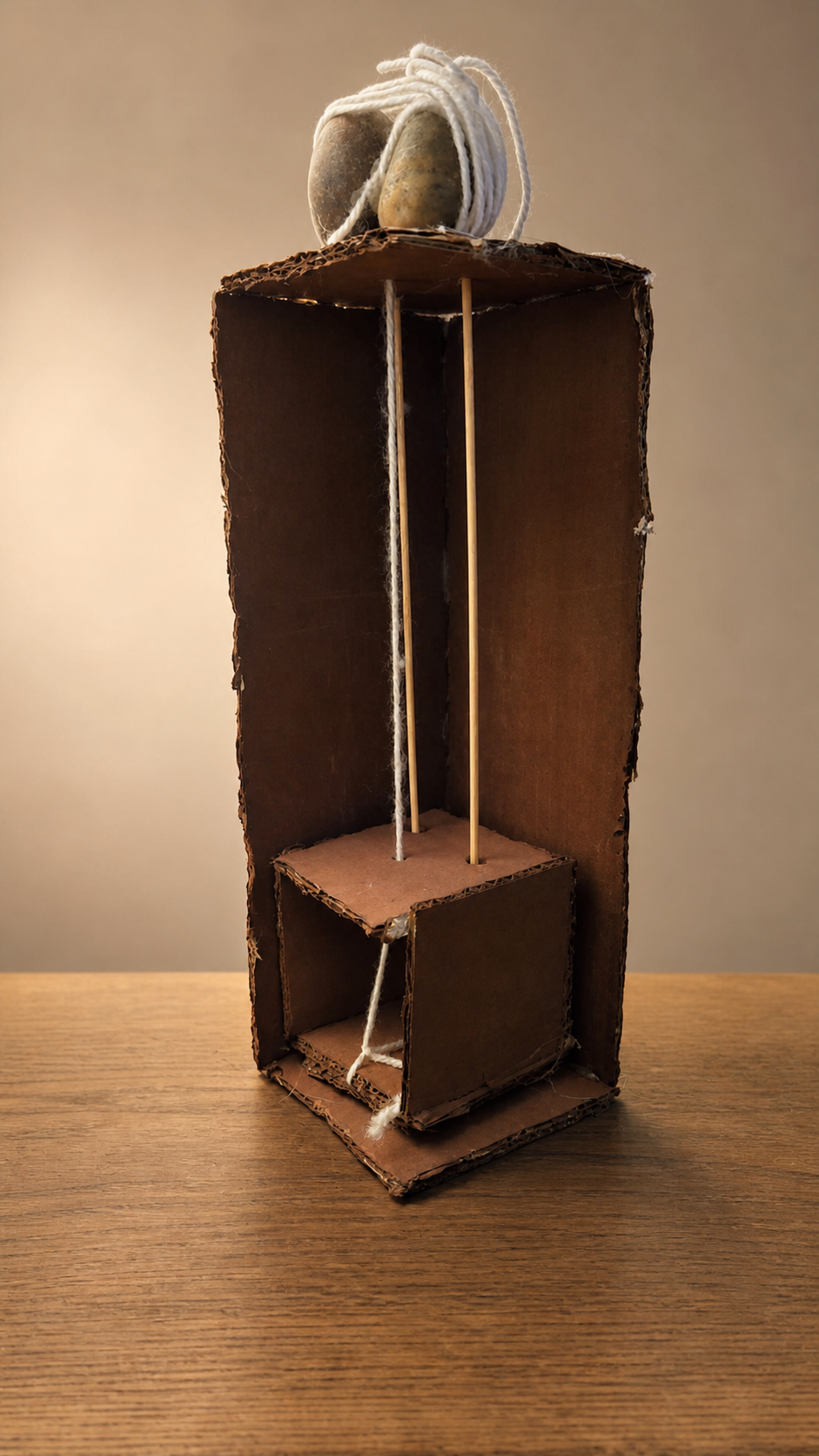
My idea was to build a tall cardboard tower where rocks act as the weight and yarn carries the movement through the model.
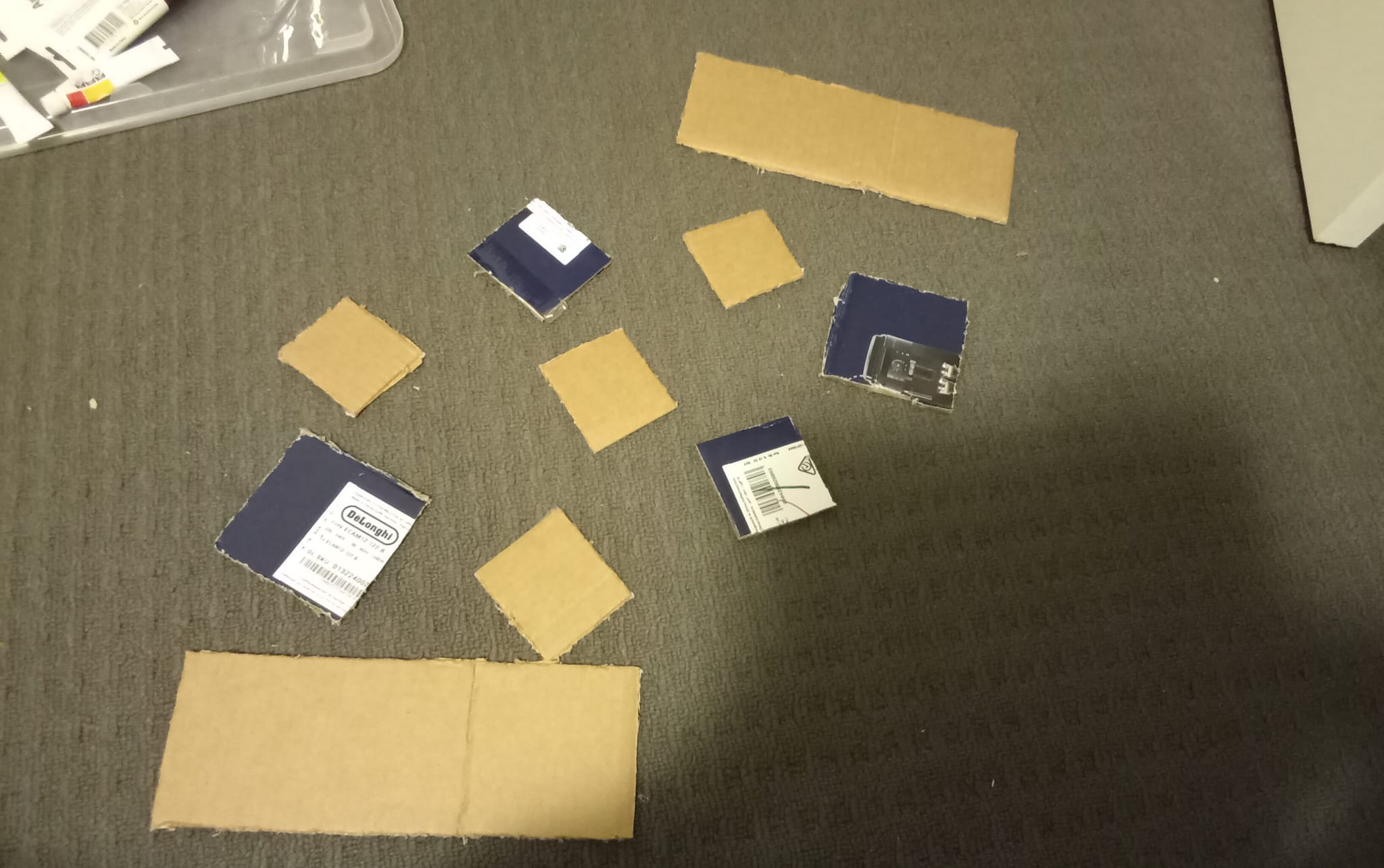
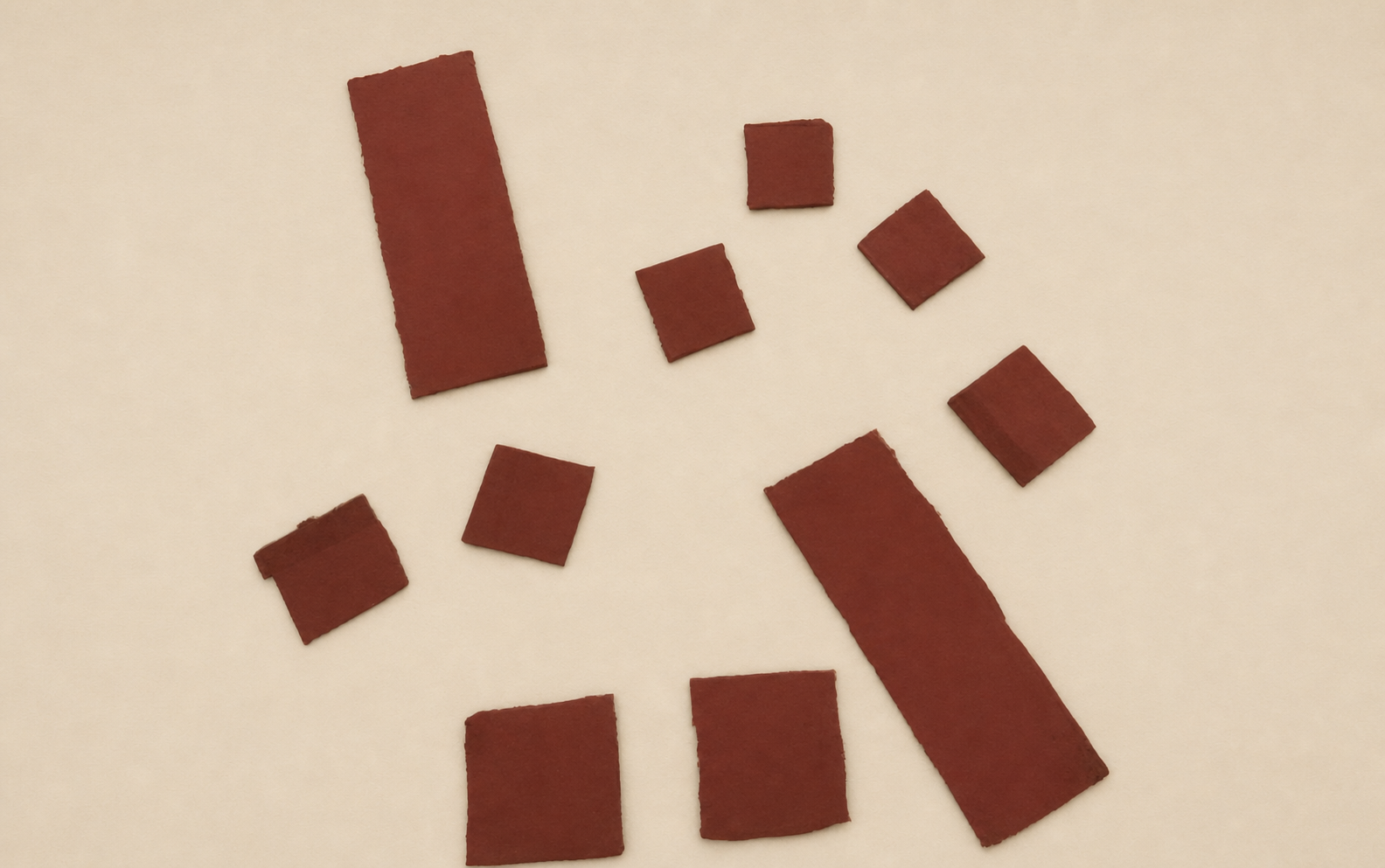
Design A: The cardboard parts were cut in different sizes before the tower was assembled.
Materials
Cardboard, brown paint, glue, hot glue gun, wooden skewers, white yarn, rocks, ruler, pencil and scissors.
Question
How does the mass of the rock weight affect the distance the yarn moves through the gravity tower?
Gravity connection
Gravity pulls objects towards Earth. The rocks have weight, so they are pulled down. Their movement pulls the yarn.
Prediction
If the rock weight has more mass, then the yarn will move further because a heavier mass has a greater weight force caused by gravity.
Design change: The final model used a strong vertical backboard and a box support at the bottom to keep the structure stable.
🛠️
Stage 2
Build diary
These are the real build photos from the project, arranged in the order the model was made.
27 July 2026 - Cut: Cardboard pieces were measured and cut for the backboard, base and shelves.
27 July 2026 - Paint: The cut cardboard pieces were painted brown and left to dry.
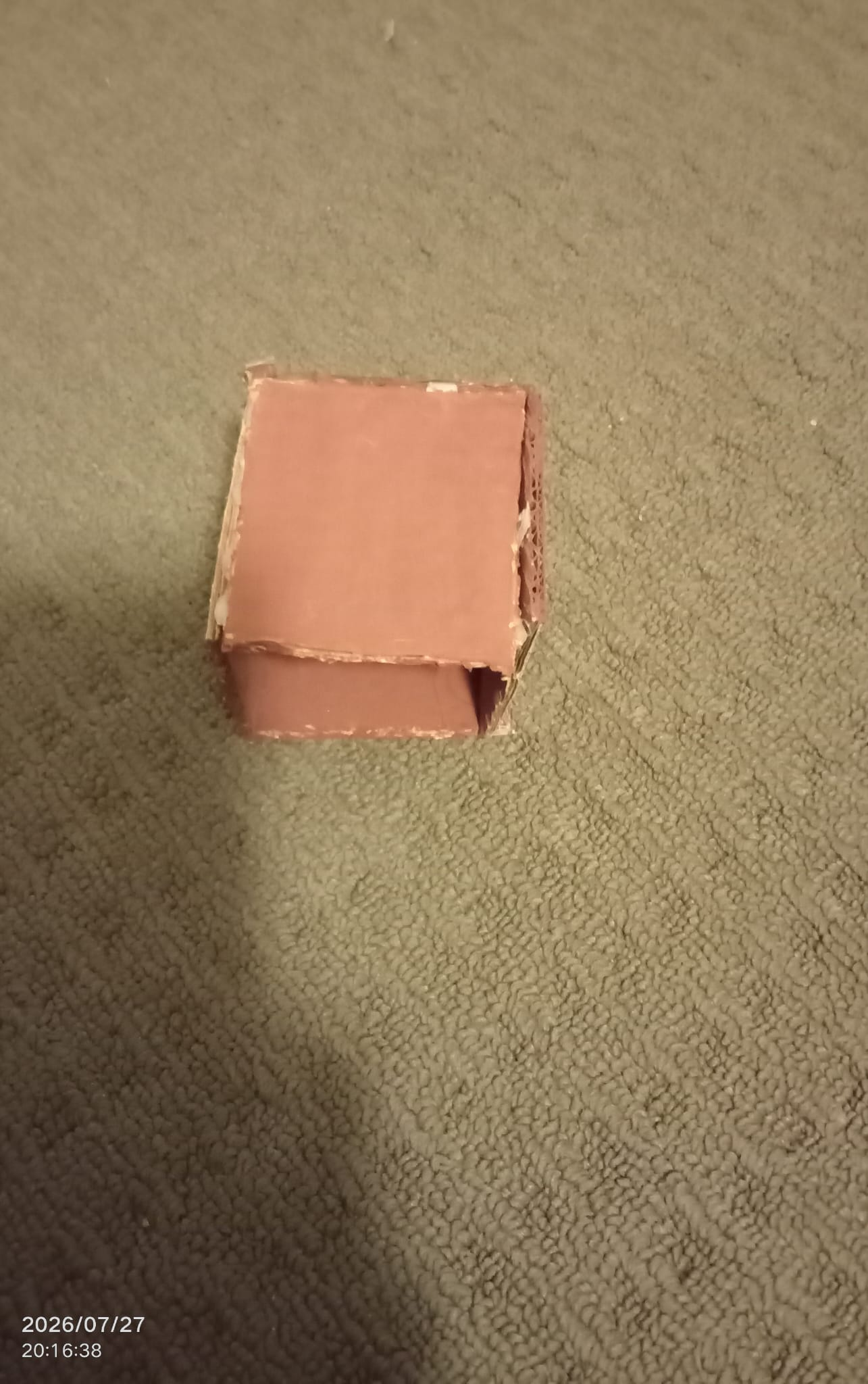
27 July 2026 - Support: A small cardboard box was made to support the lower section.
27 July 2026 - Final assembly: The tower was completed with yarn, sticks and rock weights.
1
Build the frame
Glue the tall backboard to the base with hot glue. Add the shelf and lower support, then let the glue dry.
2
Add holes and sticks
Mark positions and carefully make holes. Put wooden sticks through the cardboard to guide the yarn.
3
Add yarn and rocks
Tie yarn around the rocks and thread it through the tower. Check that the yarn can move smoothly.
Safety: Use adult help for sharp tools and keep the model on a stable table when testing.
📊
Stage 3
Data analysis
A fair test changes one thing, measures one thing, and keeps the rest the same.
Variables
Independent: Rock mass (g)
Dependent: Yarn movement (cm)
Controlled: Same tower, yarn, starting point and measuring method.
Weight force
Weight is the force caused by gravity:
W = m × g
For a 100 g rock weight: 0.100 kg × 9.8 N/kg = 0.98 N.
More mass gives a larger downward weight force.
Modelled dataset: These values were created to show the expected relationship between rock mass and yarn movement.
Modelled results table
Rock mass (g)
Trial 1: yarn movement (cm)
Trial 2: yarn movement (cm)
Trial 3: yarn movement (cm)
Average yarn movement (cm)
100
7.2
7.4
7.3
7.3
200
14.8
15.0
14.9
14.9
300
22.1
22.4
22.2
22.2
400
29.5
29.8
29.7
29.7
Modelled graph: rock mass and yarn movement
Conclusion: In this modelled dataset, increasing rock mass increased the distance the yarn moved. This is because a larger mass has a larger weight force.
🌍
Stage 4
Why the gravity lift tower works
Claim, Evidence and Reasoning explains how gravity causes movement in the model.
Claim
Adding more rock mass gives the rocks a larger weight force. Gravity pulls the rocks down, and this moves the yarn through the tower.
Evidence
In the modelled results, 100 g moved the yarn an average of 7.3 cm, while 400 g moved it 29.7 cm. The rocks are tied to the yarn, so their downward movement changes the yarn’s position.
Reasoning
Every object with mass is pulled by Earth’s gravity. Weight is calculated using W = m × g, where g ≈ 9.8 N/kg. Earth’s gravity does not become stronger when rocks are added; there is simply more mass for gravity to pull on. More mass means a bigger downward weight force, so the rocks pull the yarn further through the tower.
Science note: Rocks have mass, so Earth’s gravity pulls them downward. Adding more rocks does not make gravity stronger; it gives gravity more mass to pull, so the downward weight force becomes larger: W = m × g. The rocks move down and pull the yarn through the tower.
Extra science idea: If a string is elastic, it can stretch a little like a spring. Adding more rocks increases the downward weight, so an elastic string would stretch further until its upward pull balances the rocks’ weight. In this tower, the yarn mainly transfers movement; stretching would need to be observed and measured separately.
Reflection: This investigation helped me understand the difference between mass and weight. The rocks have mass, and Earth’s gravity produces a downward weight force that can be calculated using W = m × g. The modelled results showed a clear pattern: when the rock mass increased from 100 g to 400 g, the average yarn movement increased from 7.3 cm to 29.7 cm. This supported my prediction that a greater rock mass would pull the yarn further through the tower.
I was pleased that the recycled-cardboard tower stayed upright and that the yarn transferred the rocks’ downward movement through the model. Making three trials for each mass and calculating an average also made the pattern easier to compare. However, the investigation had limitations. Friction between the yarn, cardboard holes and wooden sticks could slow the movement. Small differences in the starting position, knots or the angle of the tower could also affect each trial. The modelled values show the expected pattern, but measurements taken from the finished tower would provide stronger evidence.
If I repeated the investigation, I would attach a ruler in one fixed position, mark the same starting point on the yarn, check the rock masses with a scale and release the rocks without pushing them. I would also test more mass values, repeat every test at least five times and compare two tower designs. These improvements would make the test fairer, reduce random error and show whether the relationship stays consistent.